The Narrative
Narrative
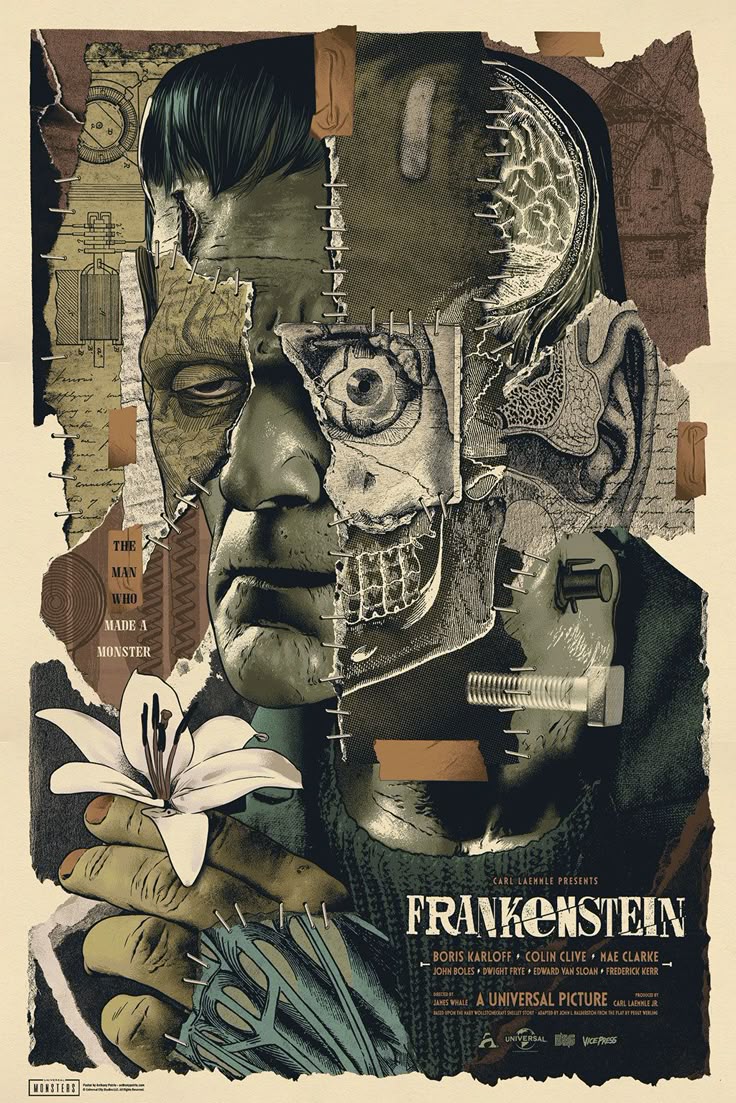
Frankenstein, or The Modern Prometheus is an 1818 Gothic novel written by English author Mary Shelley. Frankenstein tells the story of Victor Frankenstein, a young scientist who creates a sapient creature in an unorthodox scientific experiment. In Frankenstein, Mary Shelley starts with a framing narrative (Walton's letters to his sister), before moving to the main narrative (Victor's story) and then contained within this is the Monster's story of survival and how he learns from the De Lacey family. There are three separate narrators.
Themes
Mary Shelley's Frankenstein explores themes of responsibility, scientific progress, and the nature of humanity. The book is often interpreted as a warning against hubris and the dangers of scientific and technological progress.
Victor versus himself, where he battles his obsession and subsequent regret for creating life.
The creature versus Victor, reflects a tragic creator-creation struggle.
The creature versus nature, as it endures harsh elements and societal rejection while trying to survive and understand its existence.
The pursuit of knowledge is at the heart of Frankenstein, as Victor attempts to surge beyond accepted human limits and access the secret of life.
The Frankenstein monster, one of literature's most iconic creations, is often viewed through the lens of horror and fear. However, a closer examination of the character reveals a complex, multifaceted being driven by a deep-seated desire for acceptance and companionship.
Creation
Isolation
Dangers of Intellgence and Ego
Strive for perfection in society
Reflection Of Societal Fears
The novel encapsulates anxieties surrounding scientific progress, the dangers of playing God, social alienation, and the consequences of unchecked ambition.
1. Fear of Scientific Advancement
2. Fear of the "Other" and Social Rejection
3. Fear of Unchecked Ambition
4. Fear of the Collapse of Family and Social Order
5. Fear of Revolution and the Disenfranchised
Shelley’s novel not only captured the anxieties of her time but also continues to resonate with modern concerns about artificial intelligence, genetic engineering, and the ethical responsibilities of creation.